
A quieter wrist is appealing. The subscription and the app still deserve your attention.
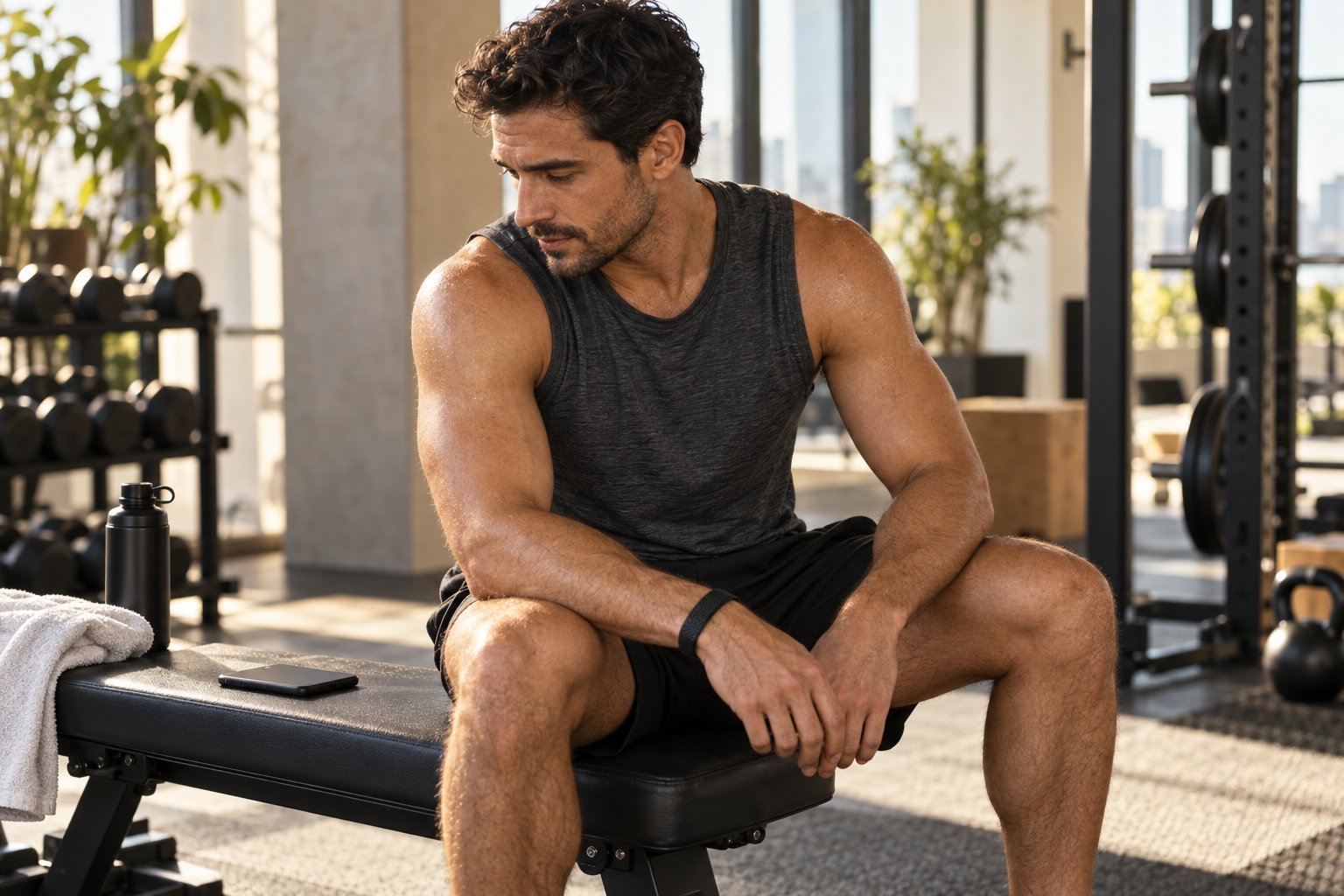
The fitness tracker has discovered the luxury of saying less. No glowing rectangle. No tiny message preview from someone who could have waited until after your workout. Just a discreet band, quietly collecting information while you go about the business of having a body.
There is one complication: the screen has usually moved to your phone. Whether that feels calmer depends on what you do when you open the app.
The short answer
For most people, the best screenless fitness tracker is the Google Fitbit Air: at $99.99, it is the lightest, lowest-cost way to get sleep and activity tracking without a screen, and its coaching membership is optional. If you never want a recurring bill, the Amazfit Helio Strap ($99.99) is the strongest no-subscription value. The Garmin CIRQA ($199.99) offers the most training detail, and WHOOP (membership from $199 a year) is the pick when guided recovery coaching is the whole point.
The buying conversation is getting more interesting. Google now sells Fitbit Air alongside a separate premium coaching membership, while WHOOP packages its experience around membership tiers. In a recent WHOOP community discussion on Reddit, users were trying to untangle device costs and renewal pricing. One thread is not a market survey, but the question is exactly right: what will this thing cost after the attractive first impression?
Buy the habit you want to change
Before choosing a band, name one useful question. Are your bedtimes becoming less consistent? Are you actually recording the walks you meant to take? Does your weekly training log match the heroic version you tell people over brunch?
Those questions give a dashboard a job. Collecting every available score gives it a very busy social life.
Our editorial preference is to start with sleep timing, activity consistency, and a record of the workouts you completed. Review patterns alongside how you feel and what your week involved. A late flight deserves context. So does a demanding session. One number should not become the entire story of your day.
If you want live pace, a timer, or information you can glance at while running, a screen is useful. Removing it is a design choice, not an automatic upgrade. Likewise, a screenless band cannot stop you from checking your phone fifteen times before breakfast.
Two different bills for a quieter wrist
These are researched comparisons, not TSS accuracy or battery tests. U.S. prices below were checked September 20, 2026, and updated November 4, 2026. Promotions, taxes, accessories, and renewal terms can change the total.
01 / START WITH THE BASE FEATURES
Google Fitbit Air
Listed device price: $99.99 at Google Store.
Why it belongs: Google's base offering includes activity and sleep tracking. Premium adds coaching built with Gemini. That separation lets you decide whether tracking alone answers your question before paying for the extra interpretation.
The ongoing cost: The displayed three-month Premium trial automatically renews at $9.99 a month unless canceled. Twelve paid months at that rate would be $119.88, in addition to the device. Google also offers Premium at $99.99 a year, which costs less than paying monthly. Trial eligibility and timing affect your first-year total.
The limit: A compatible phone, Google Account, and Google Health app are required. Google began rolling out Health Guardian's blood pressure and insulin resistance trends to Fitbit Air in late October 2026, but they require Premium, so count them toward the subscription decision rather than the device price. Google says its sleep tracking is not for diagnosing or treating medical conditions.
02 / THE MEMBERSHIP-FIRST OPTION
WHOOP One with WHOOP 5.0
Listed annual membership: $199 on WHOOP's U.S. comparison page.
Why it belongs: The entry tier includes a 5.0 device, wired Basic Charger, CoreKnit band, and Sleep, Strain, and Recovery insights. It is the relevant starting point if that style of feedback is what you want, rather than the most expensive tier by default.
The ongoing cost: Two years at an unchanged $199 annual rate would be $398 before taxes and extras. This is a comparison calculation, not a promise about future pricing. Check the specific offer and renewal terms before joining.
The limit: Peak and Life add features and have different hardware or accessories. Their advertised capabilities should not be assumed to come with One. A premium membership cannot guarantee that its advice will fit every workout or that you will act on it.
Disclosure: We may earn a commission from purchases made through our links at no extra cost to you.
The best screenless fitness trackers at a glance
Fitbit Air and WHOOP are only part of the screenless field. Here is how the main options compare on U.S. list price, subscriptions and battery life, based on Gadgets & Wearables' July 2026 roundup.
- Google Fitbit Air ($99.99): The lightest, lowest-cost pick for sleep and everyday health tracking, with up to 7 days of battery. Google Health Premium is optional at $9.99 a month or $99.99 a year.
- Amazfit Helio Strap ($99.99): The value pick, with 50+ sports modes and up to 10 days of battery. No subscription.
- Polar Loop ($199.99): Nightly Recharge and Training Load Pro with no subscription and up to 8 days of battery. Easiest if you already use Polar Flow.
- Garmin CIRQA ($199.99): The most training detail, including VO2 max and Training Status, with up to 10 days of battery. Garmin Connect+ is optional.
- WHOOP 5.0 (membership from $199 a year): The most developed recovery and sleep coaching, with more than 14 days of battery. The membership is required.
The short version: if you want to avoid a recurring bill, start with Fitbit Air, Amazfit Helio Strap or Polar Loop. If coaching is the point, WHOOP is built around it.
The best screenless fitness trackers with no subscription
If the goal is a quieter wrist and no monthly bill, these three do the job without a membership. Prices were checked November 4, 2026.
Amazfit Helio Strap
Listed price: $99.99 at Amazfit, with no required subscription.
Why it belongs: Amazfit lists up to 10 days of battery with typical use, and its BioCharge score gives you a WHOOP-style read on recovery without a membership. It can also be worn on the upper arm for training with an armband extension.
The limit: There is no built-in GPS, so routes come from your phone, and Tom's Guide found its automatic workout detection hit-or-miss for some activities.
Garmin CIRQA
Listed price: $199.99. Garmin's first screenless band launched July 24, 2026.
Why it belongs: It brings Garmin's training toolkit, including Training Readiness, HRV Status and VO2 max estimates in Garmin Connect, to a 14.8-gram module with up to 10 days of battery. A single side button starts more than 80 activity types.
The ongoing cost: None required. Garmin Connect+ is optional at $6.99 a month or $69.99 a year, according to Tom's Guide.
The limit: There is no standalone GPS, and the upper-arm strap is an extra $49.99.
Polar Loop
Listed price: $199.99, though it is often discounted at retailers.
Why it belongs: Nightly Recharge, SleepWise and Training Load Pro come with no subscription, along with up to 8 days of battery in a buttonless, 29-gram fabric band.
The limit: There is no GPS or vibration motor, and TechRadar found Polar's app dated and its automatic exercise logging patchy. It makes the most sense if you already train with Polar Flow.
Give the data a stopping point
Try a simple rule: decide what you will review, when you will review it, and what reasonable action might follow. A consistent evening wind-down is more useful than repeatedly reopening yesterday's sleep chart. A completed walk is still a completed walk when nobody has assigned it a flattering color.
If a more structured fitness goal is the point, our HYROX guide looks at the training commitment behind the appeal. If you mainly want a more repeatable routine, start with our September reset.
The best reason to lose the screen is that you prefer wearing the device that way. The best reason to keep paying is that the information helps you make decisions you value. Your wrist may look calmer. Make sure your relationship with the numbers does too.
Screenless fitness tracker FAQ
What is the best screenless fitness tracker? It depends on the bill you want. Fitbit Air and Amazfit Helio Strap are the lowest-cost options at $99.99 with no required subscription. WHOOP offers the deepest recovery coaching but requires a membership from $199 a year.
Do screenless fitness trackers need a subscription? Not always. Fitbit Air, Amazfit Helio Strap, Polar Loop and Garmin CIRQA work without one, though Google and Garmin sell optional premium plans. WHOOP is the main membership-only option.
Which screenless tracker has the longest battery life? WHOOP lists more than 14 days. Amazfit Helio Strap and Garmin CIRQA list up to 10 days, Polar Loop up to 8 and Fitbit Air up to 7.
Are screenless trackers accurate enough for sleep tracking? They are useful for spotting trends, not for diagnosis. Google, for example, says its sleep tracking is not for diagnosing or treating medical conditions.
What is the best screenless fitness tracker without a subscription? The Amazfit Helio Strap is the best value at $99.99, while the Garmin CIRQA and Polar Loop, both $199.99, add more training and recovery detail. Fitbit Air also works without one, though Health Guardian and coaching features need Google Health Premium.
Should I buy Fitbit Air or WHOOP? Choose Fitbit Air if you want low-cost sleep and activity tracking and may never pay for coaching. Choose WHOOP if daily recovery and strain coaching is the reason you want a tracker, since its membership, from $199 a year, is required.