
A little extra load can change a familiar walk. Here’s how to choose a vest without buying into every promise attached to it.
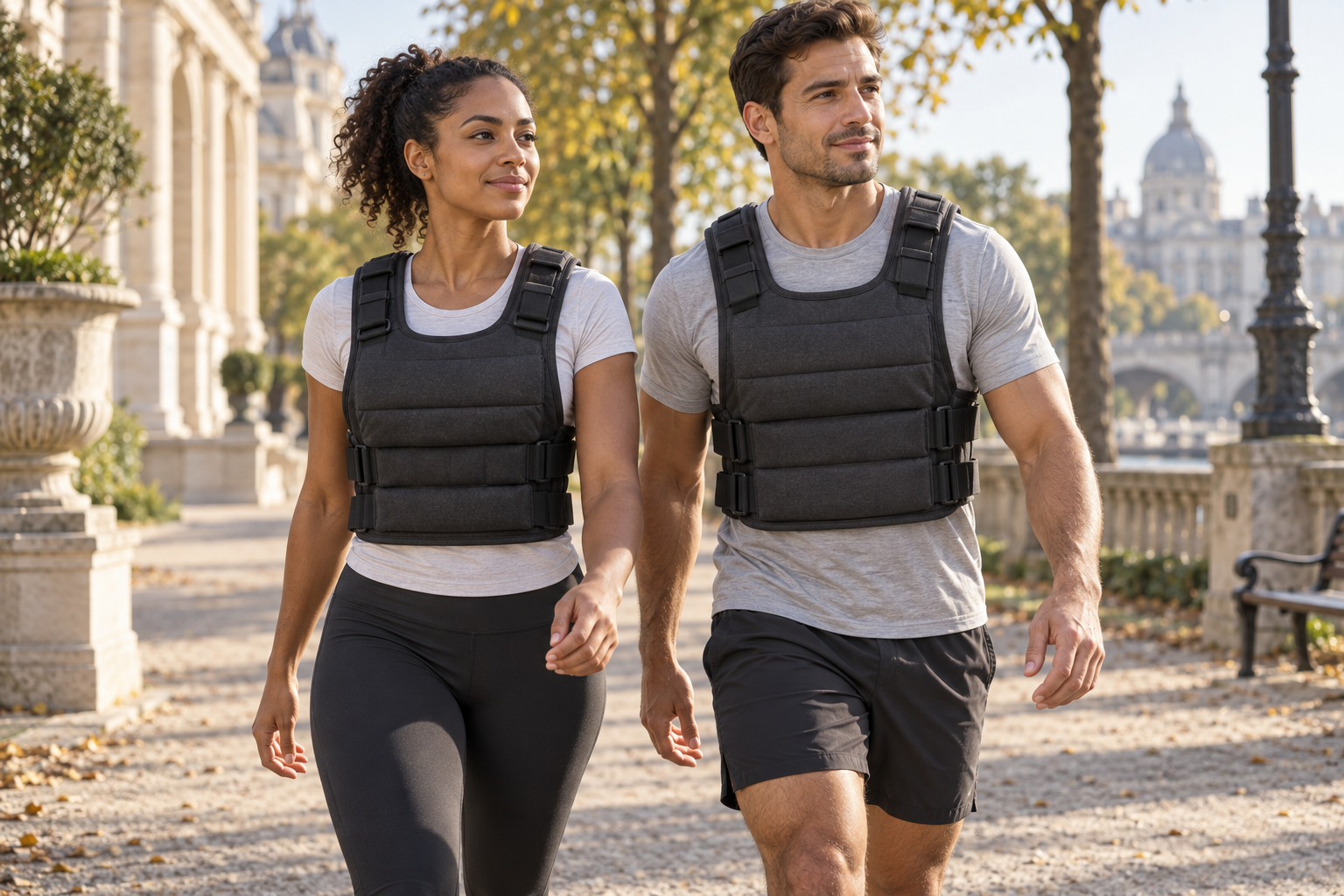
AI-generated editorial image. Generic vests shown; not the products reviewed below.
The walk used to require shoes and a reason to leave the apartment. Now it has hardware. Across the weighted-vest conversation, an ordinary loop around the neighborhood is being asked to deliver more: more effort, stronger bones, a more efficient workout. Ideally while looking good over a matching set.
The appeal is understandable. You already make time to walk. Adding resistance sounds more manageable than adding another class. But the purchase contains two different questions: does carrying extra weight change the exercise, and does that change deliver the result you want?
The first is easier to answer. The second deserves more attention than the product photograph.
What the extra weight actually does
A weighted vest adds load around your torso. That can increase the demand of walking, although the effect depends on the load, speed, terrain, and person wearing it.
An American Council on Exercise research report tested 13 women walking on a treadmill with different loads and inclines. Vest effects were more pronounced uphill; at the tested level-ground speed, the 10%-of-body-weight condition did not significantly increase metabolic cost compared with no vest. It was a small, short-term study, not evidence that every vest produces a predictable body transformation.
That distinction matters when a modest training tool acquires a makeover narrative. A harder walk is still a walk. In Cleveland Clinic’s April 2026 guidance, sports medicine physician Jessica Tomazic explains that a vest can add to strength training; simply wearing one does not build strength by itself.
Buy it to make a suitable activity more demanding. Keep the separate strength work that serves your goals.
The bone-health promise needs a footnote
You will see bone density used to sell weighted vests. The evidence needs more context than a bullet point beside “Add to cart.”
A 12-month Wake Forest trial reported in June 2025 randomized 150 older adults with obesity to weight loss alone, weight loss with daily vest use, or weight loss with resistance training. All three groups experienced similar declines in hip bone mineral density.
This was a specific weight-loss intervention in older adults, not a test of every walking routine or every potential benefit. It does, however, undermine the idea that putting on a vest reliably protects your bones. If osteoporosis or fracture risk is the reason you are shopping, discuss the exercise plan with your clinician before choosing the equipment.
The useful upgrade is a load you can manage consistently. The biggest number on the label is not a training plan.
Fit comes before ambition
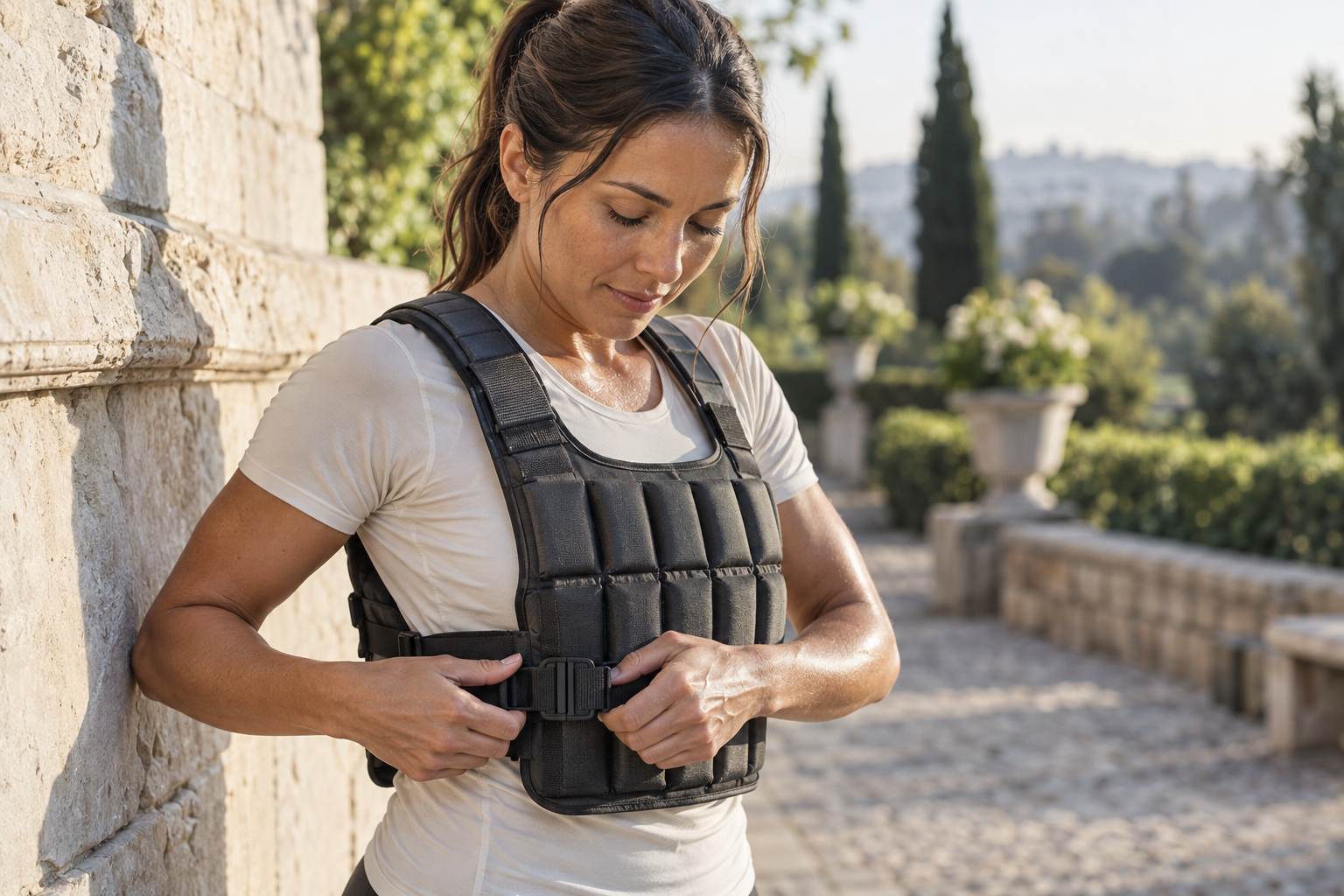
AI-generated editorial image showing a generic vest.
A vest should stay secure without interfering with comfortable breathing or movement. Check the chest and torso measurements, adjustment range, and return policy. “Adjustable straps” and “adjustable weight” are different features. One changes the fit; the other lets you reduce the load.
Cleveland Clinic recommends secure fit, breathable material, and avoiding excessive weight. Its general guidance discusses 5 to 10% of body weight; that is not a target everyone must reach. A first outing should be an opportunity to assess comfort, not an obligation to finish your usual distance under a new load.
For an otherwise healthy walker already comfortable with their routine, a conservative approach is a lighter load and a shorter, familiar route. Do not increase weight, pace, and distance together. If the vest changes how you walk or causes pain, take it off rather than treating discomfort as proof it is working.
Previous injuries deserve a clinician’s input. Harvard Health also advises against weighted-vest walking during pregnancy or with neck or back pain.
Three vests, three different reasons to buy
These are researched selections based on published specifications, not products tested by TSS. Prices below were checked September 8, 2026 and may change. Choose the design that fits your body and training needs; there is no requirement to graduate to the heaviest option.
All in Motion Weighted Vest, 8 lb
$35 at Target · Fixed 8 lb weight
The straightforward option for someone who already knows an eight-pound load suits them. Target lists padded straps, a buckle closure, and a reflective stripe. The price makes it easier to justify than a premium training system when the intended use is a familiar walking route.
Keep in mind: The weight cannot be reduced. It is not automatically a beginner pick just because it costs less. Check the fit before committing; strap adjustment does not guarantee that one vest accommodates every torso.
Hyperwear Hyper Vest FIT
$114.99 for the displayed 10 lb option · Removable half-pound weights
This women-focused design leaves the chest area free of weights and uses adjustable side lacing. The practical attraction is the ability to remove individual half-pound weights, rather than accept a fixed load. Hyperwear lists a maximum capacity of 10 pounds and small, medium, and large sizes.
Keep in mind: Check the measurement chart; the listed chest range across those sizes is 30 to 43 inches. The empty-shell option contains no weights, so confirm the selected configuration. A lower maximum is useful only if it matches what you need.
GORUCK Rucking Weight Vest
Vest listed at $155 · Check the selected plate configuration and total
The more substantial option for someone deliberately shopping for a plate-based system. GORUCK uses padded shoulder straps, Cordura construction, and pockets designed for its curved ruck plates. The appeal is the equipment format and construction, not an assumption that a more expensive vest delivers better health outcomes.
Keep in mind: Confirm compatible plates, what your order includes, and the complete loaded weight before buying. GORUCK’s loading and fit guide is worth reading first. This would not be my default choice for a tentative first experiment with added load.
Your skin is wearing it, too
The vest introduces another surface against a sweaty body. The American Academy of Dermatology explains that heat, trapped sweat, and friction from sports equipment can contribute to acne mechanica. A clean, moisture-wicking layer under the vest and attention to rubbing points are sensible details, not aesthetic afterthoughts.
Follow the vest’s cleaning instructions and change out of damp workout clothes. Our guide to workout breakouts and chafing covers the skin side of getting dressed to train. The minimalist skincare routine edit is useful afterward if your post-workout routine has become another full production.
The walk still has to happen
A weighted vest makes the most sense when it serves a habit you already have. You know your route. You know how an ordinary walk feels. You can notice what changes when you add a manageable load.
If the vest makes that habit less comfortable, less consistent, or something you dread getting dressed for, the purchase has missed its purpose. You are allowed to enjoy walking without upgrading it.
The pavement does not check labels.