

Whey protein acne research does not support declaring every shake guilty. A small randomized trial found no worsening compared with its control, while observational studies and case reports raise questions about individual breakouts. The trial's published abstract and a case-control study deserve to be read together. If you notice a pattern, discuss it with a dermatologist instead of abandoning acne treatment or conducting a complete dietary demolition. Your shaker can answer questions without being convicted by Instagram.
You bought the powder for your training routine. Somehow it has acquired a second career as the prime suspect in your skincare routine. The packaging promised convenience, not a courtroom appearance.
The useful question is narrower than whether protein is good or bad. What do the studies actually say about whey and acne, and what can you sensibly do with that information? This is an evidence guide, not a supplement shopping list. No replacement powder has sponsored an escape vehicle.
What does the whey protein acne trial actually show?
The 2024 randomized trial followed 49 young men with mild to moderate acne for six months. Compared with a non-whey nutritional supplement, whey did not worsen acne count or severity; the authors reported noninferiority. That challenges an inevitable-harm claim, not every possible individual reaction.
Our interpretation: a small sample with existing acne cannot settle every question about other populations, formulas or new-onset breakouts. We reviewed the public abstract, not the paid full paper, and are not inventing unavailable methods. The honest version is already useful. It simply has fewer opportunities for a dramatic thumbnail.
Why do other studies still link whey with breakouts?
A 2024 case-control study in northern Jordan compared 100 men with acne and 101 without it, recruited from fitness centers. Whey use was more common among the acne group, and an association remained in the authors' adjusted analysis. Participants reported supplement use, and researchers examined them for acne.
An association is a reason to investigate, not proof that the powder caused an individual person's pimples. The researchers themselves identify the study's cross-sectional design and sample size as limitations and call for larger prospective research. It cannot settle the sequence of cause and effect as cleanly as a controlled experiment designed for that question. Read the methods and limitations.
Do not pick the study that flatters your existing opinion and send the other one to voicemail. The trial and the observational study ask related questions using different designs. Taken together, they support a measured conversation, not a universal ban or a universal guarantee.

What can the early case reports tell us?
A 2012 report described five teenage athletes whose acne began after starting whey supplements. Four cleared after discontinuing whey, and one had a flare after restarting. Acne treatments were also part of these clinical histories. Those details make the report worth discussing, but five selected patients cannot tell us how often this happens among everyone who drinks a shake.
A 2017 report described six adolescent boys with chest and back acne following whey use. Improvement occurred after discontinuing the supplement and receiving acne treatment. Because both changed, attributing all improvement to one action would be overconfident. The report describes an observation; it does not supply a clean comparison group.
Case reports are useful warning lights. They are not population forecasts. Your personal timeline matters, but neither a stranger's before-and-after story nor a small case series can diagnose your skin through the screen. A comment section is a particularly poor place to outsource the distinction.
For another supplement controversy that benefits from reading the actual research, see our creatine and hair-loss investigation.
Should you cut out every dairy product?
That is a much bigger leap than the evidence discussed here supports. The American Academy of Dermatology's diet guide discusses possible links between cow's milk and acne, while emphasizing uncertainty and the need for more research. Findings about milk, whey supplements and an entire eating pattern are not interchangeable verdicts.
The AAD suggests paying attention to whether particular foods or drinks seem to accompany breakouts and discussing diet as part of acne care. It also stresses that diet changes alone are not the whole treatment plan. Diet and acne guidance.
Our editorial advice: take a specific question to your clinician. Bring the product name, ingredient list and when you started it. Ask whether a supervised change makes sense for you, rather than turning breakfast into a series of increasingly expensive exclusions. We are not recommending a substitute supplement, a serving amount or a homemade challenge test.
What else deserves attention around your workout?
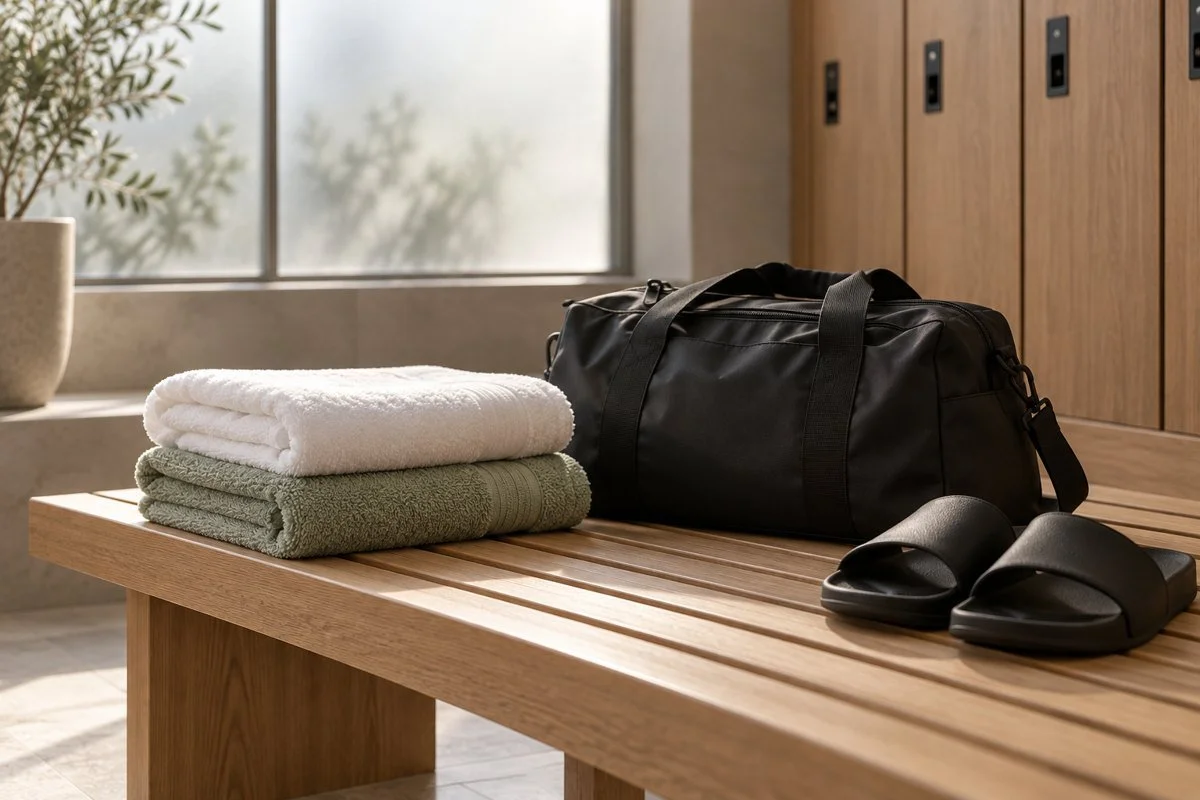
The shaker is easy to blame because it sits still for questioning. Your routine deserves a look too. The AAD's workout-acne guidance recommends clean workout clothes, a clean towel, gently patting sweat rather than rubbing, cleaning shared equipment and showering after exercise. Gentle cleansing matters; vigorous scrubbing is not a higher level of commitment.
Treat these as practical habits, not proof that you caused a breakout by being insufficiently hygienic. You do not need to stop exercising to take your skin seriously. The same AAD guide explicitly supports continuing exercise while adjusting skincare habits and maintaining acne treatment.
If you need the broader framework, start with our skincare guide for men who work out. Our post-workout acne article covers the gym context. Neither link is an instruction to buy six new bottles because one pimple has arrived with confidence.
When should a dermatologist take over the investigation?
If acne is deep or painful, the AAD recommends dermatologist care. It also warns against squeezing breakouts and repeatedly irritating skin with aggressive cleansing or rapid product changes. Waiting for the perfect dietary explanation is not a prerequisite for getting help.
A diagnosis matters because folliculitis and other conditions can resemble acne. A dermatologist can assess the type and location of the breakouts and tailor treatment. A photograph of a shaker bottle cannot do that, even if someone has added a red circle and an alarm emoji.
Keep the appointment practical: what changed, when, and what are you using? The goal is an accurate assessment and a workable plan, not proving that your favorite supplement is morally innocent. Your skin has no interest in winning an argument online.

What are the common questions about whey and breakouts?
Does whey protein definitely cause acne?
No universal conclusion is justified: the randomized trial did not find worsening against its control. Observational reports still leave individual questions open.
Does the trial prove whey is acne-safe for everyone?
No: its stated sample was small and limited to young men with existing acne. Treat the result as bounded evidence, not a guarantee for every formula or person.
Will stopping a shake replace acne treatment?
The AAD describes diet as only one part of acne management. Discuss a suspected trigger without abandoning your clinician's treatment plan.
Should you scrub harder after training?
No: the AAD warns that scrubbing and rubbing sweat can irritate acne-prone skin. Use gentle care rather than treating your face like a pan with something burned onto it.
Are all bumps after the gym acne?
No: the AAD notes that other conditions, including folliculitis, can look like acne. Persistent or uncertain breakouts deserve an assessment instead of a diagnosis based on your supplement cupboard.
This article is educational and does not provide individual medical or nutrition advice. No supplements or skincare products were tested or recommended for purchase for this story.
Sources
- Journal of Dermatology: Whey protein and male acne: A double-blind, randomized controlled trial, published online January 2024, public abstract reviewed.
- Dermatology Research and Practice: The Effect of Whey Protein Supplements on Acne Vulgaris among Male Adolescents and Young Adults: A Case-Control Study from North of Jordan, April 2024.
- Cutis: Whey protein precipitating moderate to severe acne flares in 5 teenaged athletes, August 2012, abstract reviewed.
- Health Promotion Perspectives: Acne located on the trunk, whey protein supplementation: Is there any association?, March 2017.
- American Academy of Dermatology: Can the right diet get rid of acne?, accessed October 2026.
- American Academy of Dermatology: Is your workout causing your acne?, accessed October 2026.
- American Academy of Dermatology: 10 skin care habits that can worsen acne, accessed October 2026.
- American Academy of Dermatology: Acne: Diagnosis and treatment, accessed October 2026.