
For chapped lips, start with a non-irritating balm or ointment and stop products that sting. Cleveland Clinic recommends simple moisturizing care and avoiding licking or picking, while the American Academy of Dermatology advises lip SPF outdoors. Persistent trouble needs assessment, not a more dramatic flavor. The goal is comfortable lips you can forget about, not a peppermint endurance event conducted between sets.
You would not describe a shoe that hurts as “activating.” Yet a lip balm can arrive with a brisk tingle and suddenly discomfort has a publicist. Your mouth does not need to prove it can take a joke.
For people who train outdoors, lip care belongs beside the small practical decisions you already make before leaving. Check the weather, find your keys, choose the appropriate protection. It does not need its own elaborate ceremony, and it certainly does not need five products competing to be the most refreshing.
Why do chapped lips keep coming back?
Cold or dry weather, sun exposure and habitual licking are among the causes described by Cleveland Clinic. The clinic also notes that lip skin lacks oil glands and is vulnerable to drying. That helps explain why the answer is not always “buy the stronger version.”
Look for the pattern before enlarging the shopping list. Does discomfort appear after a particular product? Is the issue tied to time outside? Are you repeatedly licking the area without noticing? These observations are useful information to take to a clinician if the problem continues. They are not a home diagnostic test.
Our skincare guide for men who work out covers the wider routine. Think of lip care as one specific job within it. The fact that the tube is small does not mean it deserves exemption from basic scrutiny.
Should a lip balm burn or tingle?
No. The AAD says burning, stinging or tingling can mean a lip product is irritating your lips and advises stopping it. While lips are chapped, its avoid list includes menthol, camphor, fragrance and certain flavorings such as mint and cinnamon.
That is guidance for an already uncomfortable area, not a declaration that every person must fear every scented object forever. Keep the decision specific: does this product suit your lips now? A cooling sensation is not an independent certificate of repair.
Our editorial shopping preference is deliberately dull: a clearly labeled, straightforward formula whose purpose you can explain. Read the actual ingredient list instead of letting words like rescue, extreme or intensive audition for the role of evidence. The label should tell you what is in the tube. The adjective has other ambitions.
What does a simple lip-care routine look like?
Cleveland Clinic recommends balm or ointment as needed, including reapplication after eating or drinking. It also recommends avoiding picking and biting. Treat that as maintenance, not an invitation to keep adding new treatments each time the mirror becomes available.
Make the useful product easy to find. Our suggestion is to keep it where you get ready, with a separate place for the outdoor SPF product. Having a plan for the tube is more helpful than owning several that have disappeared into different coats.
Avoid making smoothness an immediate deadline. You do not have to solve every visible flake before leaving the bathroom. When care becomes a sequence of scraping, inspecting and trying again, it has lost the plot. A comfortable routine should be easier to describe than your training split.
If cold weather has also changed the rest of your face routine, see our fall skincare guide. Your lips do not automatically need every product that works elsewhere on your face.
Which researched pick keeps the indoor part uncomplicated?
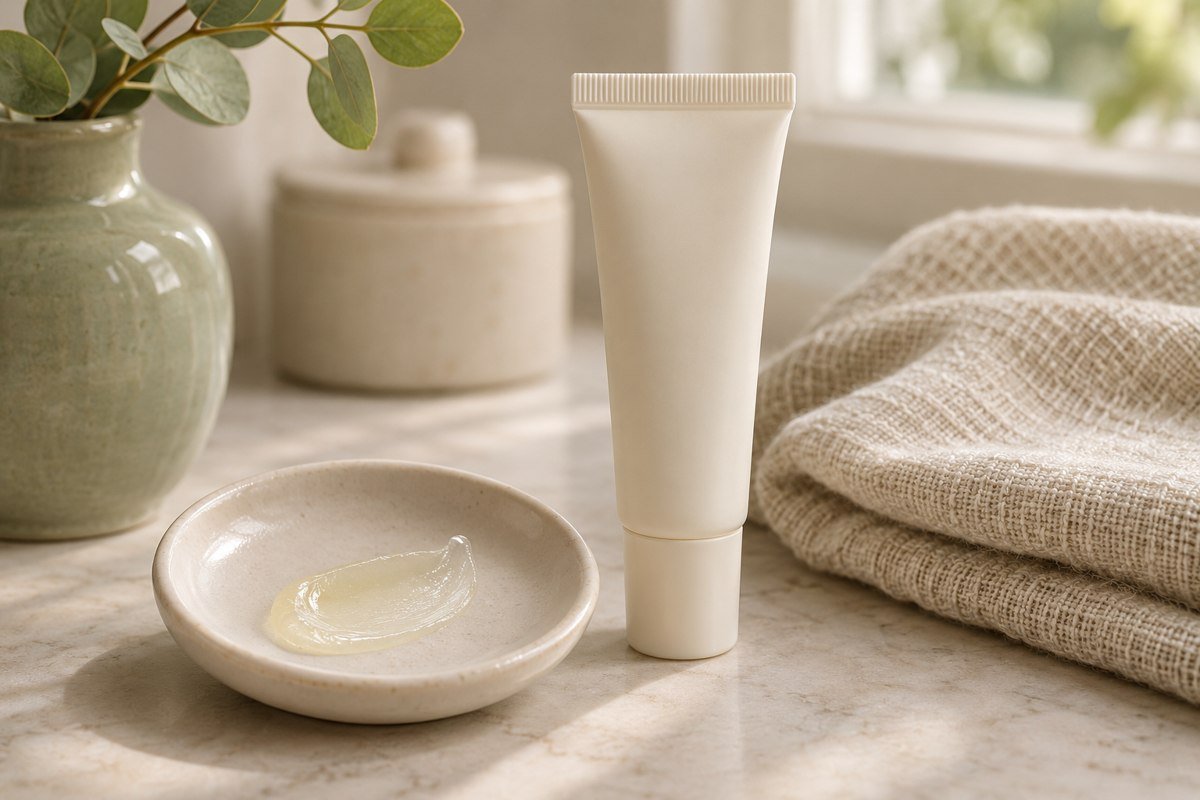
This is a researched selection, not a product Jeremy tested for this story. A suitable plain ointment you already own may make a new purchase unnecessary. The illustration shows a generic texture, not the named product or a treatment result.
Vaseline Original Healing Jelly Tube, 1.75 oz. Researched pick. Target lists the tube at $3.49 and in stock, checked November 6, 2026, before tax and shipping. Local availability and prices can change. The listing identifies 100 percent white petrolatum and no added fragrance; the manufacturer confirms the Original Healing Jelly tube format.
Why it belongs: an inexpensive, portable way to try a plain ointment rather than another flavored balm. The AAD includes white petroleum jelly among options for very dry lips. Limitations: the texture is glossy, this is not a sunscreen, and buying it does not identify the cause of persistent inflammation. No particular brand is mandatory for the basic category.
What changes before an outdoor run or workout?
Add the sun-protection decision. AAD guidance recommends a non-irritating lip balm with SPF 30 or higher, using zinc oxide or titanium oxide, before going outdoors and reapplying every two hours outside. This advice still applies in winter.
Read the product's own directions as well. A plain ointment and a labeled SPF balm have different jobs; a glossy finish is not an SPF rating. Pack the product you intend to use instead of assuming the one currently at the bottom of your bag covers everything.
We are giving selection criteria here rather than forcing a second shopping recommendation. Check the exact current label, including ingredients and directions. If a formula irritates you, do not insist on continuing simply because it satisfies a number on the front. Ask a dermatologist or pharmacist for help choosing an appropriate alternative.
Keep the rest of the kit proportionate. Our gym-bag skincare edit is useful when a simple plan has quietly become a luggage allowance.
Why does licking feel like a solution and become a problem?
DermNet describes a repeating wet-and-dry cycle from saliva that can disrupt the skin barrier and cause inflammation. The discomfort can encourage further licking, keeping the cycle going. It is a habit worth noticing, not a character defect.
Do not diagnose a rash from that description. DermNet explains that other conditions can resemble lip-licker's dermatitis and that diagnosis is clinical. If the surrounding skin is persistently irritated, an appointment is more useful than deciding the internet has settled the matter.
For your own notes, record what you notice without turning it into a surveillance operation. “I keep licking my lips during the walk home” is useful. A spreadsheet grading every moment of dryness is less likely to improve your evening.
Could the product itself be part of the problem?
Yes, but irritation and allergy are not interchangeable labels. DermNet's allergic contact cheilitis guide identifies lip cosmetics, oral-care products and other exposures as possible allergen sources. A clinician may use patch testing, including relevant personal products, to investigate suspected contact allergy.
Bring the actual products or clear ingredient photographs to that discussion. Do not arrive with only “the blue one,” which is also the description of several thousand other objects. The useful detail is the formula and the timing, not whether the packaging looked reassuring.
That guide also notes that allergic and irritant problems can coexist. This is why swapping one apparently soothing product for another is not a substitute for finding out what keeps causing trouble. We are not recommending home allergy tests or a medicated treatment experiment.
When should you stop troubleshooting it yourself?
Cleveland Clinic advises seeing a healthcare provider if symptoms worsen, fail to improve after a few weeks, or keep bleeding despite home care. Persistent lip inflammation can have causes beyond ordinary seasonal dryness. A new purchase is not the only next step.
Take your observations and product list with you. Ask what the likely cause is, whether your current product is appropriate and what should change. Those questions are more useful than demanding the strongest available balm. Strongest is a shopping category. Appropriate is the actual assignment.
The sensible endpoint is uneventful: lips that are comfortable, an outdoor protection plan and a product you do not need to defend. Your workout may involve effort. Applying lip balm should not become the bonus round.
FAQ
Is tingling proof that lip balm is working?
No: AAD guidance treats burning, stinging and tingling as signs to stop an irritating lip product. More sensation is not the goal.
Does plain petroleum jelly replace lip sunscreen?
No: the Vaseline tube listing identifies white petrolatum as its active ingredient, not an SPF claim. Use an appropriately labeled sun-protection product for the outdoor job.
Can repeatedly licking lips make dryness worse?
Yes: DermNet explains how repeated saliva exposure can perpetuate irritation. Notice the habit and seek assessment for persistent symptoms rather than assuming every rash has that cause.
What if a simple routine does not help?
Cleveland Clinic recommends professional assessment when the problem worsens or persists. Bring your product details so the next decision is based on more than another promising tube.
Educational information, not an individual diagnosis. Product selection is researched, not firsthand testing; editorial illustrations show generic objects and no patient results.
Sources
- AAD: 7 dermatologists' tips for healing dry, chapped lips, accessed November 2026.
- Cleveland Clinic: Chapped Lips, February 2024.
- DermNet: Lip licker's dermatitis, January 2020.
- DermNet: Allergic contact cheilitis, 2010, accessed November 2026.
- Vaseline: Original Healing Jelly Tube, accessed November 2026.
- Target: Vaseline Original Healing Jelly Tube, 1.75 oz, price checked November 6, 2026.