
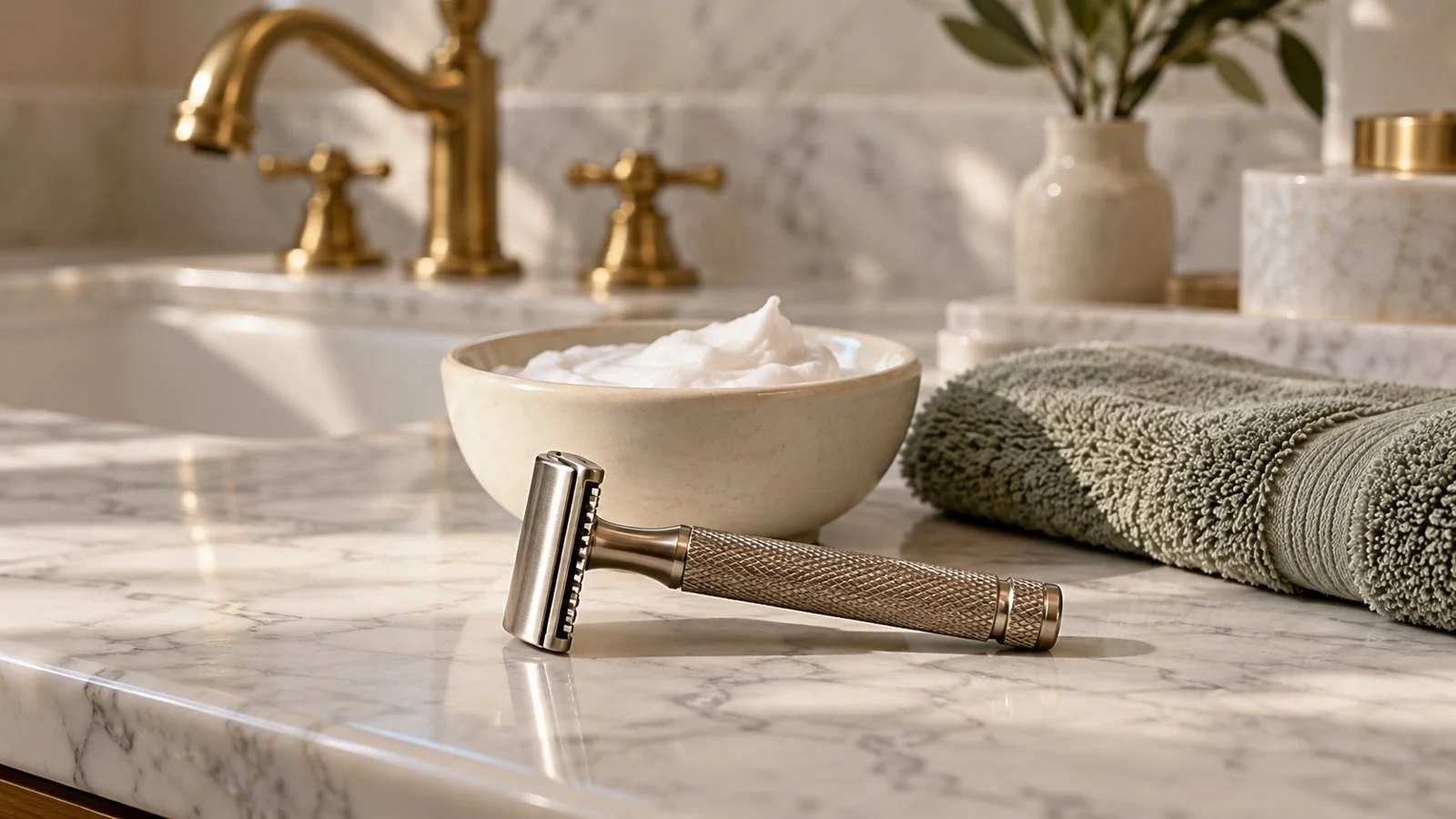
If you want to know how to prevent razor bumps, start with the shave: soften the hair, use shaving cream, follow its growth direction and stop chasing the closest possible finish. Dermatologist guidance supports changing technique, while DermNet explains why closely cut hairs can grow back into skin. Persistent bumps deserve an assessment, not a stronger-smelling aftershave. Your neck should not have to file a complaint every time you tidy your beard.
You train with a plan. Then you shave in forty seconds, inspect the result under hostile lighting and invite the razor back for an encore. The neck has apparently been classified as a surface that needs sanding.
This guide is about the decisions that matter around a workout: how closely you shave, what touches the area and whether the bumps are actually the condition you think they are. There is no prize for owning a bathroom cabinet that looks like a specialist clinic. There is also no prize for enduring a miserable shave because a handsome razor has excellent marketing.
What are razor bumps, and why does your neck get them?
Razor bumps, or pseudofolliculitis barbae, are an inflammatory response associated with hairs re-entering skin after hair removal. They commonly affect the beard and neck, particularly beneath the jaw, where hairs can grow in different directions. Coarse, curly hair is more susceptible, though other hair types can be affected. DermNet's clinical overview explains the mechanism and the possibility of dark marks or scars.
That is different from assuming every spot is acne or every post-shave complaint is an infection. Folliculitis barbae can look similar and can coexist with razor bumps, according to the same DermNet review. A product label cannot make that distinction for you.
Our practical takeaway: describe what happens instead of arriving with a diagnosis borrowed from a video. Note where the bumps appear, which tool you use and whether the same area is repeatedly affected. That gives the conversation somewhere useful to go. “My skin hates everything” is emotionally understandable, but medically rather light on detail.
How do you prevent razor bumps without abandoning shaving?
Start by looking at the direction your beard grows. The AAD's razor-bump guide recommends mapping that direction, avoiding skin stretching during shaving and not plucking hairs inside bumps. Your neck is not necessarily a continuation of the straight downward route on your cheek.
Next, soften the hair with water and use a shaving cream or gel. The AAD's shaving advice suggests shaving after a shower, following hair growth and rinsing the blade between strokes. For sensitive skin, it suggests a product labeled for that concern.

Then retire the pursuit of absolute smoothness. The AAD's detailed technique guidance favors short strokes, light pressure and avoiding an excessively close shave. It advises against passing over the same area more than twice. Repeatedly revisiting one awkward patch is not precision if the result is an irritated neck.
We would make one modest editorial upgrade to the morning ritual: allow enough time to see what you are doing. The rushed final pass before a meeting is a scheduling decision, not a dermatological necessity. A slightly less ambitious finish is allowed. Nobody is conducting a texture audit in the elevator.
Should you shave before or after the gym?
The sources reviewed here do not establish a universal waiting period between shaving and exercise. We are not inventing a sacred thirty-minute window because a timetable makes advice look official.
What the AAD does recommend is washing after exercise with a mild cleanser and lukewarm water. It also recommends moisturizing after washing or shaving while skin is still damp. Our scheduling suggestion is to choose the part of your day when you can do those basics calmly and follow your tool's instructions.
Friction matters too. The AAD's folliculitis guidance explains that rubbing, shaving and tight clothing can damage follicles, with damp, hot skin more vulnerable. That does not prove your workout caused your bumps. It does give you a reason to notice an abrasive collar or equipment strap instead of automatically buying another treatment.
For the broader routine, use our skincare guide for men who work out. If your bag contains enough bottles to qualify as a retail concession, our gym-bag skincare edit will help you reconsider the staffing.
Which shaving products are worth considering?
These are researched picks, not products Jeremy tested for this article. The clinical guidance informs the selection criteria; it is not an endorsement of either brand. Prices below were checked October 28, 2026, before tax and shipping. You do not need a new tool if your current approach is comfortable and works for you.
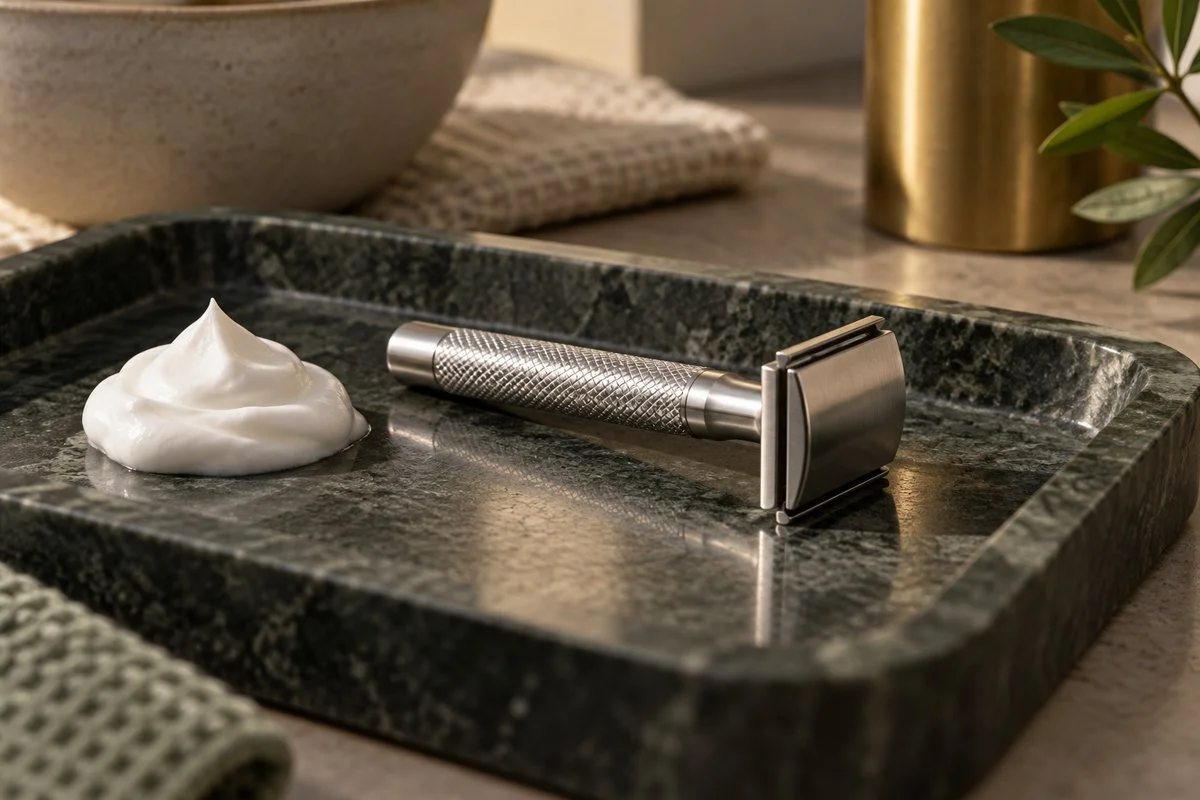
Is the Bevel Safety Razor a useful single-blade option?
Researched pick: Bevel Safety Razor, $49.95 at Bevel. The brand's current listing describes a brass-weighted, single-blade razor supplied with ten blades. It offers a concrete option if you want to try the simpler blade arrangement discussed in the AAD's men's skincare guidance.
Why it belongs: a defined tool for a defined decision, rather than an entire branded ritual. The limitation: a safety razor requires learning its handling, and buying one does not guarantee that bumps disappear. Read the manufacturer's instructions and do not translate a weighty handle into permission to press harder. The word “safety” is not a substitute for attention.
Is Vanicream Shave Cream a sensible fragrance-free pick?
Researched pick: Vanicream Shave Cream, 6 fl. oz., $9.95 at Dermatology Specialists. The retail listing gives that price and size. The manufacturer identifies a non-lathering formula for sensitive skin, without botanical extracts or essential oils; its pictured label identifies it as fragrance-free.
Why it belongs: a straightforward shave medium if fragrance is something you want to avoid. The limitation: non-lathering means it will not produce the theatrical foam mountain in a shaving commercial, and a sensitive-skin label is not an individual tolerance guarantee. Follow its directions, including frequent razor rinsing. The illustration above is generic lather, not a photograph of this formula or either featured product.
What should happen after the last stroke?
The AAD recommends a dry storage area, rather than leaving the razor in the shower or on a wet sink. Its general guidance suggests replacing disposable razors or blades after five to seven shaves; follow your specific tool's replacement and cleaning instructions, which may be stricter. Bevel, for example, recommends a fresh blade for each shave on its product page.
For sensitive skin, the AAD advises mild, fragrance-free products. Our fall face-care guide covers the surrounding cleanser and moisturizer decisions. You can keep that routine boring. Boring has excellent availability and rarely demands a launch party.

When should you stop experimenting and see a dermatologist?
If changing your shaving habits does not help, the AAD recommends dermatologist care, including to avoid lasting changes such as scarring. Its folliculitis guide also stresses the value of confirming the diagnosis and getting individual help if shaving cannot be stopped.
Bring your tool name, products and routine. Ask whether a different shaving approach, a break from shaving or treatment makes sense for your situation. You are seeking an assessment, not assembling a prescription from internet fragments. A neck that keeps protesting deserves more than another bottle with “extreme” on it.
What are the common questions about razor bumps?
Should you shave against the grain for a cleaner finish?
The AAD recommends shaving with hair growth to help prevent bumps and irritation. A closer result is not automatically a better result for your skin.
Can you pluck the trapped hairs?
The AAD advises against plucking hairs inside razor bumps, which can worsen the problem. Leave the excavation project out of your routine.
Is an electric shaver worth trying?
DermNet lists switching to an electric shaver as an option. Follow that device's instructions, including whether it is designed for wet or dry use.
Is shaving less often always the answer?
Guidance varies: DermNet discusses reducing shaving, while the AAD describes more frequent shaving in its prevention routine. Ask a dermatologist to tailor frequency if you keep getting bumps rather than treating either interval as universal.
Are all beard-area bumps razor bumps?
No: folliculitis can resemble other conditions, and an examination can clarify what you are treating. A familiar location is a clue, not a diagnosis.
Educational information, not an individual diagnosis or treatment plan. Product selections are independently researched, not hands-on test results; prices and availability can change.
Sources
- DermNet: Pseudofolliculitis barbae, February 2022.
- American Academy of Dermatology: How to prevent razor bumps, October 2022.
- American Academy of Dermatology: Razor bump remedies for men with darker skin tones, accessed October 2026.
- American Academy of Dermatology: Hair removal: How to shave, accessed October 2026.
- American Academy of Dermatology: Skin care tips for men, accessed October 2026.
- American Academy of Dermatology: Acne-like breakouts could be folliculitis, accessed October 2026.
- Bevel: Safety Razor, price and details checked October 2026.
- Vanicream: Shave Cream, formula and directions checked October 2026.
- Dermatology Specialists: Vanicream Shave Cream, price and size checked October 2026.