
A comfortable scalp is a reasonable request. A new head of hair deserves a better footnote.
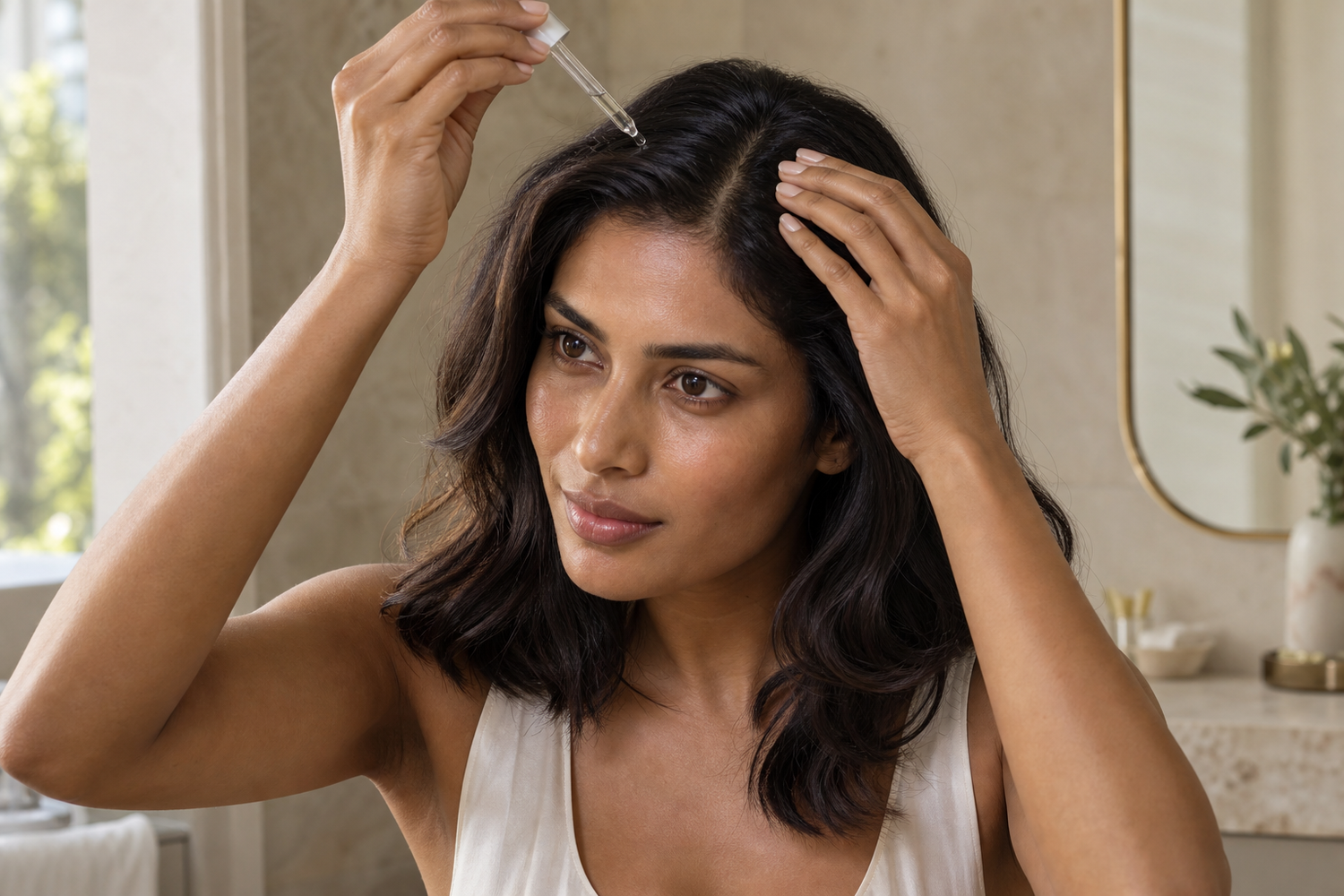
Your scalp has been promoted. Once a place you shampooed, it now has a serum wardrobe, a longevity strategy, and a suspiciously ambitious quarterly forecast. The packaging is excellent. The question is what, exactly, you are paying it to do.
This month’s coverage of K18’s FutureIQ serum is a useful example of where the conversation has moved: beyond moisture and into shedding, gray hair, and longevity. Those are very different promises to put in one bottle. They deserve different standards of evidence.
There is a sensible idea beneath the glamour. Scalp skin can need care. But dryness, flaking, and a widening part should not all send you to the same shopping basket. Start with the problem, then read the claim. The order matters.
Hydration is a job. Regrowth is another.
The American Academy of Dermatology notes that dry scalp and dandruff can look similar. Simple dryness may improve with a gentle, non-medicated shampoo; dandruff often needs a different approach. If the symptoms persist despite over-the-counter care, a dermatologist can work out what is actually happening.
For dandruff, the AAD’s treatment guidance points to shampoos with appropriate active ingredients, used according to their directions and your hair type. A moisturizing dropper is not automatically a substitute. There is no prize for making a stubborn scalp condition more luxurious.
Similarly, a formula described as giving fuller-looking hair is making an appearance claim. That wording should not quietly become a promise to treat the cause of hair loss. If you are shopping because your hair is noticeably thinning, make that distinction before choosing a serum.
Read the footnote before the transformation
A useful product study should tell you what was measured, how many people took part, how long they used the formula, and what it was compared with. An instrument measuring skin hydration answers a different question from an assessment of hair density. A satisfaction questionnaire answers another one again.
Take K18’s published FutureIQ disclaimers. Its claim about fewer grays refers to an expert visual assessment of 44 participants at 12 weeks. That is more information than a floating percentage, but it is not, by itself, proof of permanent reversal of graying. The footnote does not tell the reader whether the assessment was blinded or describe a control group.
That is a reason to keep the conclusion narrow, not to declare the product useless. Brand-reported results are evidence to examine. They are not an invitation to substitute the most exciting interpretation for the outcome actually measured.
Two bottles, two different briefs
These are researched selections based on current product information, not TSS wear tests. We chose two formulas from the same brand because they make the distinction unusually clear: one targets scalp hydration, the other the appearance of hair density. They are alternatives for different priorities, not a two-step shopping requirement.
01 / For scalp hydration
The Ordinary Natural Moisturizing Factors + HA for Scalp
60 mL
Why it belongs: The brand positions this milky leave-in formula around dryness and hydration, with hyaluronic acid, squalane, and moisturizing-factor ingredients. That is a more focused brief than promising to solve every hair concern at once.
Best fit: Someone looking for an optional moisturizing step for a dry scalp, after considering whether their cleanser is contributing to the problem.
The limit: Buy it for its hydration brief. The product page does not make it a treatment for dandruff or a replacement for a hair-loss assessment.
Use: The brand says to shake it, then massage a few drops into a clean, dry scalp daily, ideally at bedtime. Leave it in and follow the label’s patch-test advice.
Shop Scalp Hydration at The Ordinary →02 / For fuller-looking hair
The Ordinary Multi-Peptide Serum for Hair Density
60 mL
Why it belongs: This water-based leave-in uses peptide technologies, plant extracts, and caffeine. The brand describes the benefit in terms of the appearance of hair thickness and fullness.
Best fit: A reader interested in trying a cosmetic density serum with measured expectations, rather than treating its name as a diagnosis.
The limit: A long ingredient list cannot establish how much this finished formula will help you. The product page reviewed does not provide a detailed controlled clinical trial that would let us put a reliable regrowth percentage on it.
Use: The brand directs a few drops onto a clean, dry scalp once daily, ideally at bedtime, without rinsing afterward. Patch-test and stop if irritation occurs.
Shop Hair Density at The Ordinary →When the next step is an appointment
The AAD’s hair-loss guidance explains why treatment depends on the cause. Minoxidil can help some early hair loss, but it is not a universal fix, and benefits require continued use. A dermatologist can help distinguish a cosmetic concern from a condition that needs treatment.
That is the appointment to make if the real question is why you are losing hair. For persistent flaking or irritation, get the scalp assessed rather than repeatedly adding products. The next bottle should not be responsible for figuring out the diagnosis.
Give one product a clear assignment
Start with one priority and one addition. Keep the rest of your routine steady enough to notice whether the product suits you. The same logic sits behind our edit of an overstaffed skincare routine: more steps need a reason to exist.
If your scalp is comfortable and your routine works, you do not owe this category a purchase. If you do buy, be precise about what would count as success. Moisturizing skin and treating hair loss are separate ambitions. A good serum should be able to tell you which job it applied for.