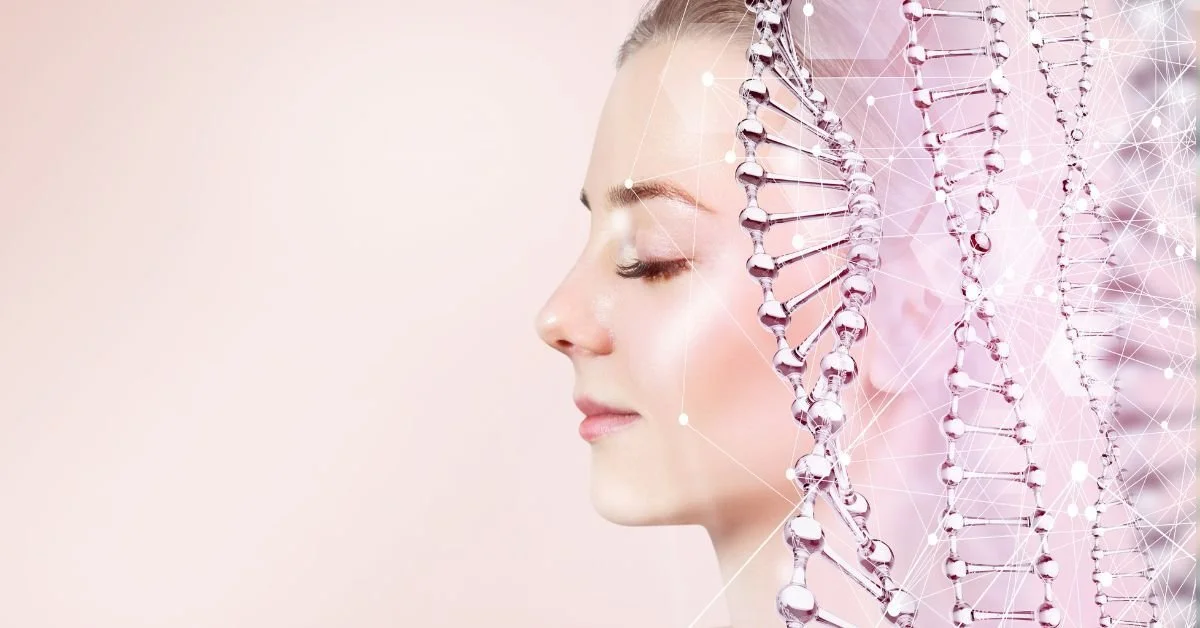
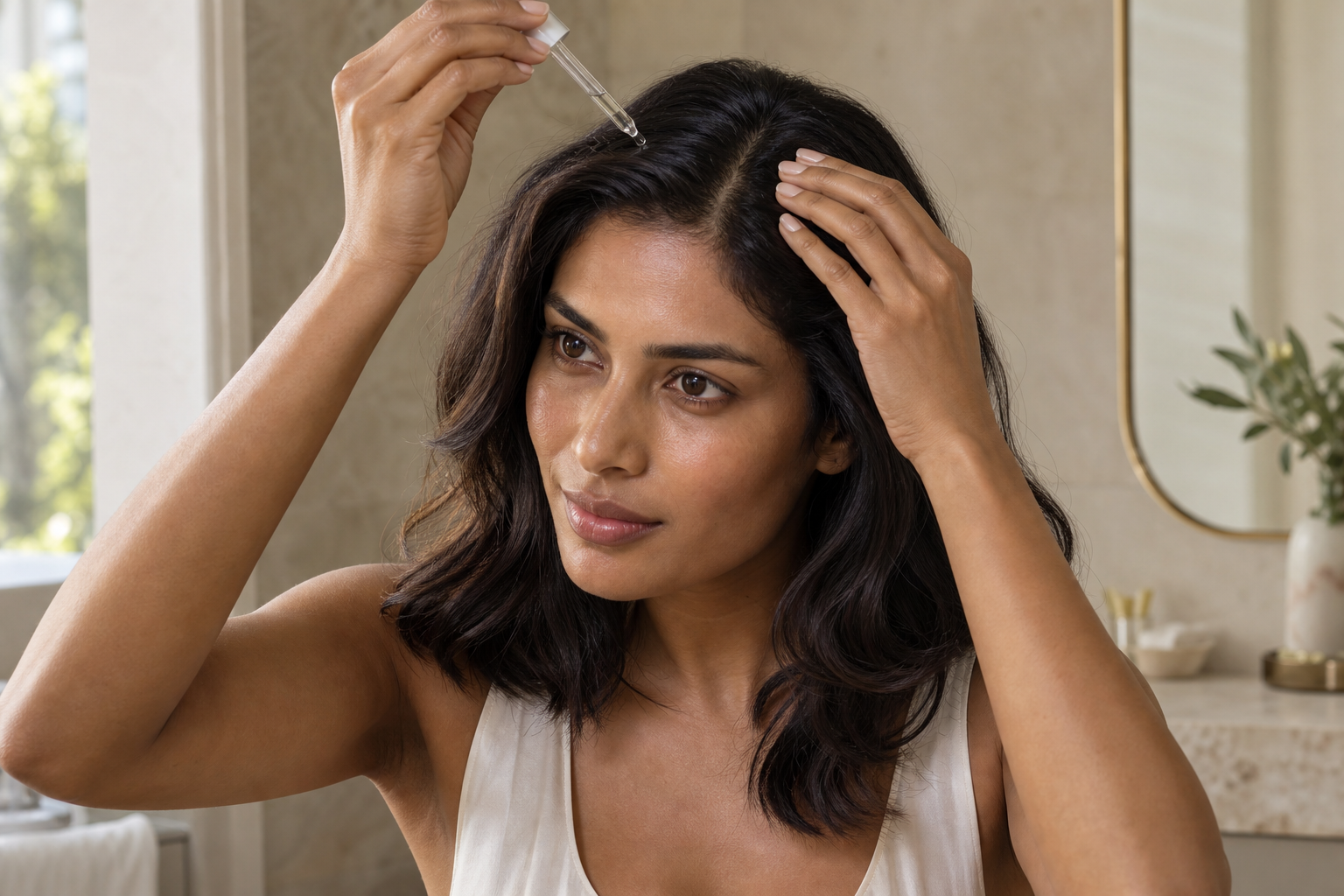
If retinol is the drill sergeant, peptides are the smooth-talking strategist—quietly convincing your skin to make more collagen, hold more moisture, and look like you sleep nine hours a night.
The case for peptides
Peptides are short chains of amino acids—the building blocks of proteins like collagen and elastin. Translation: they help skin look firm, bouncy, and expensive. Unlike louder actives, peptides behave like diplomatic messengers; they slip in, deliver the memo to produce more collagen and reinforce the barrier, and leave you with smoother texture and a better-supported complexion. Because collagen production coasts after your mid-twenties, fine lines and laxity eventually take the stage. Peptides aren’t time travel, but they’re an elegant detour.
The four types of peptides
Not all peptides do the same job, which is why ingredient lists often stack several:
- Signal peptides tell skin to make more collagen, softening the look of fine lines.
- Carrier peptides deliver trace minerals like copper to the skin. The best known is GHK-Cu; read our copper peptide guide for more.
- Enzyme-inhibiting peptides slow the breakdown of the collagen you already have.
- Neuropeptides help relax expression lines, a gentle topical cousin of the injectable approach.
How to fit them into a real routine
Morning routines love peptides. Cleanse, apply vitamin C, smooth on a peptide serum or cream, then finish with sunscreen. In the evening, cleanse, use a retinoid if you’re on that plan, layer peptides, and seal with a richer moisturizer. They play well with vitamin C, niacinamide, ceramides, hyaluronic acid, and sunscreen. If you’re doing low-pH acids, give peptides their own moment afterward—especially copper peptides, which prefer a less acidic stage. Expect eight to twelve weeks of steady use for visible results, and wear SPF daily.
The edit: formulas that earn their space
For a smart, sales-friendly lineup that still feels editorial, start with a serum-and-cream duo you’ll actually use. A multi-peptide classic, the “Buffet” + Copper Peptides 1% from The Ordinary, stacks several peptide complexes with copper for a springier look—press it in at night beneath a simple moisturizer when you want firming without fuss. If you prefer a gel-cream that behaves beautifully under sunscreen and makeup, Drunk Elephant Protini Polypeptide Cream delivers signal peptides in a cushiony texture that suits combination and normal skin.
Minimalists who want performance without crowding the shelf should reach for Paula’s Choice Peptide Booster; mix a few drops into your moisturizer or pat it on solo to quietly upgrade any routine. For targeted delivery with a refined finish under makeup, Medik8 Liquid Peptides uses “drone” technology to ferry actives to where they’re most useful. And when your barrier needs extra diplomacy—post-retinoid nights, flights, or winter radiators—Skinfix Barrier+ Triple Lipid-Peptide Cream layers ceramides and lipids with peptides for that first-class-cabin plushness.
Pro tip: choose one peptide serum and one peptide cream. Stacking five near-identical formulas won’t multiply results, but it will multiply clutter.
More worth knowing: Olay Regenerist Collagen Peptide 24 is the budget-friendly pick that pairs peptides with niacinamide, and Peter Thomas Roth Peptide 21 Wrinkle Resist Serum is the maximalist option, with 21 peptides and neuropeptides in one bottle.
Who benefits most
- Prevention mode (20s–30s): keeps collagen lively and the barrier happy.
- Correction mode (30s–50s+): expect more “snap,” refined texture, and softer-looking lines with consistency.
- Sensitive/retinoid-shy: a gentler anti-aging path or an easy off-night partner to strong actives.
Pairings for maximum payoff
Think of peptides as the long-game architect and surround them with a supportive cast. Hydrators like hyaluronic acid and glycerin plump the surface while peptides do deeper remodeling. Ceramides and barrier creams lock it all in. On retinoid nights, layer a peptide cream afterward to buffer dryness; on alternate nights, let a peptide serum headline. For the full-face approach, double down on sleep, stress management, and a diet rich in omega-3s and antioxidants.
When you’ll see results
- Weeks 2–4: makeup glides better; less post-cleanse tightness.
- Weeks 6–8: subtle firmness and refined texture around eyes and smile lines.
- Weeks 10–12: the quiet compliments—keep going; collagen loves consistency.
Peptide FAQ
Are peptides safe for sensitive skin?
Generally, yes. Peptides are among the gentler anti-aging ingredients, which makes them a good fit for skin that can't handle much retinol. Patch test anything new.
Can I use peptides with retinol?
Yes. On retinoid nights, apply the retinoid first and layer a peptide cream on top to buffer dryness. The one pairing to space out is copper peptides with strong, low-pH acids.
Are peptides better than retinol?
They do different jobs. Retinol speeds up cell turnover; peptides support collagen and the skin barrier. Many routines use both.
Can peptides help with acne scars?
By supporting collagen, they may soften the look of shallow scarring over time. Deeper scars usually need in-office treatments like microneedling or lasers.
Read next
Build your smartest routine with our guide to anti-aging skincare that actually works, then restore your glow from the inside out with our curated list of luxury wellness retreats. If your barrier feels cranky from over-exfoliating, recalibrate with ceramides and lipids in our Health & Wellness hub.
The bottom line: Peptides are the quiet luxury of skincare—no theatrics, just better architecture. Use them under SPF in the morning and after retinoids at night, choose a duo you’ll actually use, and give it three months.
Read More From The Skin Sophisticate